Turning Data
Into Profits

+6011-2768 2180

OEE (Overall Equipment Effectiveness) monitoring for optimizing machine efficiency in production.
SMART OEE (Overall Equipment Effectiveness)

Increase machine utilization, production output and quality through Smart OEE System (Overall Equipment Effectiveness)

SMART OEE (Overall Equipment Effectiveness)

Overall Equipment Effectiveness - Smart OEE

Published: 25 March 2015 | Updated: 16 December 2025

Overall Equipment Effectiveness System for Digitize & Automate Machine Utilization, Output & Quality Performance Monitoring

What is Overall Equipment Effectiveness (OEE)?

Overall Equipment Effectiveness (OEE) is a globally recognized performance metric used in manufacturing to measure how effectively equipment is utilized during the production process. Specifically, it evaluates performance based on three key factors: Availability, Performance, and Quality. As a result, manufacturers can identify losses, reduce inefficiencies, and improve overall operational effectiveness.

In response to these needs, Smart OEE is an advanced, IR 4.0–ready OEE software developed to help manufacturers monitor, analyze, and improve equipment performance in real time. Notably, the system automatically captures production data from machines, eliminating manual data entry, human errors, and reporting delays. By doing so, Smart OEE provides real-time visibility into machine status, downtime, production output, and quality performance, thereby enabling faster decision-making and proactive issue resolution.

Furthermore, Production Equipment Effectiveness helps organizations identify the root causes of downtime, speed losses, and quality defects through structured analytics and visual dashboards. With this capability, real-time alerts and historical trend analysis allow manufacturers to take corrective actions promptly, while simultaneously optimizing production schedules and improving asset utilization across the shop floor.

To support continuous improvement initiatives, Smart OEE is designed to empower manufacturers to increase productivity, reduce unplanned downtime, and enhance equipment reliability. In addition, the system promotes data-driven decision-making and aligns with Lean Manufacturing and Industry 4.0 strategies, making it suitable for discrete, process, and mixed manufacturing environments.

Today, Smart OEE is widely used by manufacturers to maximize equipment performance and improve operational transparency. Ultimately, it drives sustainable productivity growth by supporting management, production teams, and maintenance teams with accurate, real-time insights.

Management Pain and Challenges of Traditional OEE

Management Pain Challenges of Traditional OEE pdf page 0001

Solutions - SMART OEE

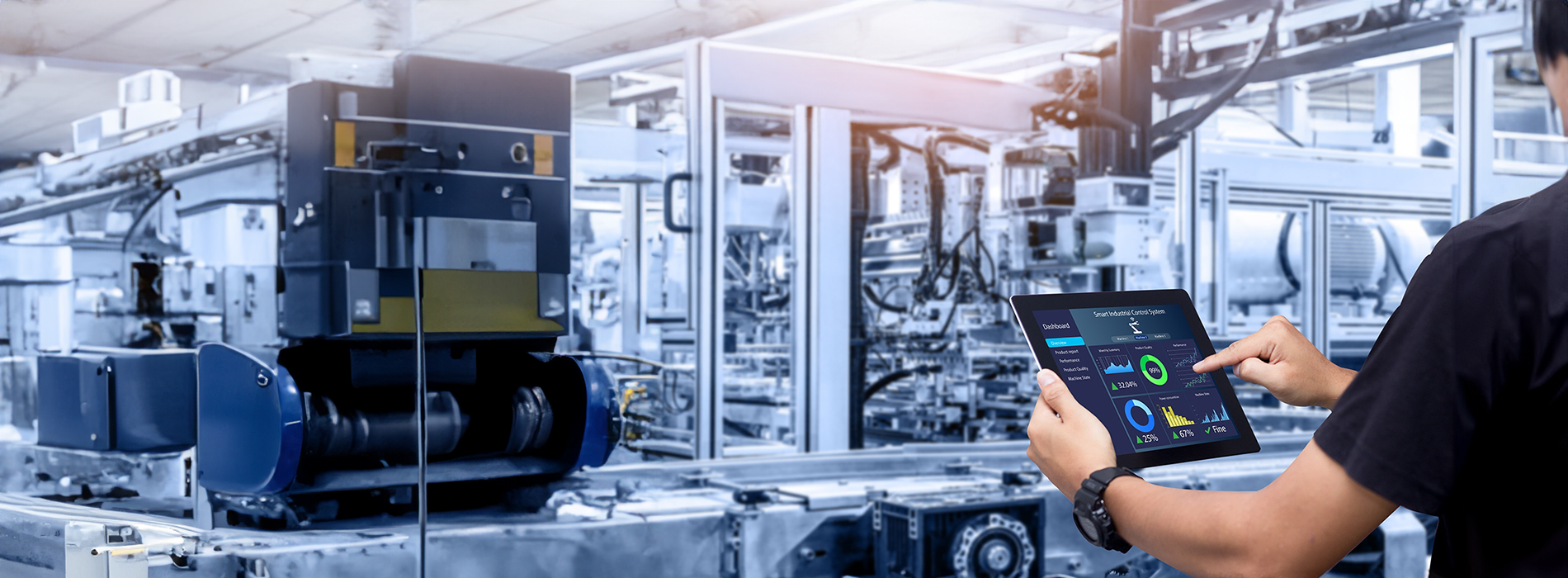
Smart OEE maximizes equipment efficiency by providing real-time performance monitoring and automated data collection. This overall equipment effectiveness software reduces downtime, enhances maintenance management, and boosts productivity, enabling manufacturers to achieve higher operational efficiency and equipment utilization.

Implementation of Smart OEE to enhance production efficiency through real-time monitoring and automation.
Old Way VS New Way OEE pdf page 0001
  1. Equipment Downtime: Frequent, unplanned downtime vs. Reduced downtime with real-time monitoring.
  2. Data Collection: Manual, error-prone data collection vs. Automated, accurate data capture.
  3. Performance Insights: Limited performance visibility vs. Comprehensive, real-time insights.
  4. Maintenance Scheduling: Reactive maintenance vs. Proactive, predictive maintenance.
  5. Productivity: Productivity losses due to inefficiencies vs. Maximized productivity with optimal equipment performance.

Key Functions & Features of SMART OEE

Green 6 Points Creative Process Diagram Infographic Graph

Key Benefits of SMART OEE

Colorful Geometric Social Media Tips Graph

Frequently Asked Questions (FAQ)

1. What is Overall Equipment Effectiveness (OEE) in manufacturing?

2. How do you calculate OEE (Availability × Performance × Quality)?

OEE is calculated as Availability × Performance × Quality. Availability measures planned vs unplanned downtime, Performance compares actual cycle speed vs ideal cycle speed, and Quality measures good parts vs total parts produced. An OEE dashboard makes this calculation automatic and consistent across shifts and lines.

3. Why is OEE important for improving productivity and reducing downtime?

OEE helps manufacturers identify the biggest losses that reduce throughput—such as breakdowns, changeovers, minor stops, slow cycles, and quality rejects. By tracking OEE in real time, teams can respond faster, reduce unplanned downtime, improve line efficiency, and increase output without adding new machines.

4. What is a good OEE benchmark for production lines?

A “good” OEE depends on your industry, product mix, and automation level, but many manufacturers use OEE benchmarks to set improvement targets over time. The most practical approach is to track your current baseline by line/shift, then improve the biggest loss category first (Availability, Performance, or Quality) to drive measurable gains.

5. How does OEE software collect real-time production and downtime data?

OEE software can capture production counts, cycle time, stop reasons, and downtime events through operator inputs and/or connectivity to machines and sensors. A real-time OEE system standardises data collection, reduces manual reporting, and provides accurate analytics for daily management reviews and continuous improvement.

6. Can OEE integrate with MES, SPC/QC, and Industrial IoT systems?

Yes. An OEE system is typically most valuable when connected to your production and quality ecosystem—linking OEE results to work orders, machine status, defect/reject data, and traceability records. Integration with MES, QC/SPC, and Industrial IoT helps manufacturers correlate downtime and speed losses with process quality issues and production constraints.

Related Solutions:

Contact Us Today to Start Your Digital Transformation Journey!

How did you hear about us?