Turning Data
Into Profits

+6011-2768 2180

Introduction to Smart MES—enhancing manufacturing efficiency with real-time visibility and control over production processes.
MANUFACTURING EXECUTION SYSTEM

Automate short floor job tracking process through proven Smart Manufacturing Execution Systems (MES)

MANUFACTURING EXECUTION SYSTEM

Manufacturing Execution System

Published: 19 October 2020 | Updated: 25 December 2025

Manufacturing Execution System Software for Real-Time Production Tracking

What is Manufacturing Execution System (MES)?

Manufacturing Execution System (MES) by Blue Ocean Data Solutions, designed to help manufacturers transition into Industry 4.0 and Smart Factory 4.0. This advanced, cloud-based Production Execution System integrates seamlessly with ERP systems, SCADA, and PLC controls, enabling real-time production monitoring, automated work order management, and complete shop floor control.

Built for discrete manufacturing, batch production, and high-mix low-volume operations, Manufacturing Operations System delivers end-to-end production visibility, machine connectivity, and paperless workflows. In addition, features such as digital work instructions, quality control modules, inventory management, and OEE tracking reduce cycle time, eliminate manual data entry, and enhance traceability and regulatory compliance.

Furthermore, Smart MES leverages IoT-enabled data collection, AI-driven analytics, and predictive maintenance to optimize operator performance, minimize downtime, and enable faster, data-driven decisions. The web-based MES dashboard provides centralized access to KPIs, downtime analysis, and real-time status updates from any device, anywhere.

Across industries including automotive, electronics, metal fabrication, pharmaceuticals, F&B, and precision engineering, Smart MES offers scalable deployment for SMEs and enterprise manufacturers alike. Moreover, its flexible architecture supports MES–ERP integration, SCADA–MES synchronization, and barcode system compatibility, ensuring smooth deployment across the digital ecosystem.

Ultimately, Smart MES empowers manufacturers to improve operational efficiency, reduce waste, and achieve full digital transformation, making it a future-ready solution for smart manufacturing.

Management Pain and Challenges of Traditional MES

Challenges of Traditional MES: Limited Visibility, Inefficiencies, and Poor Data Integration

Solutions - SMART MES

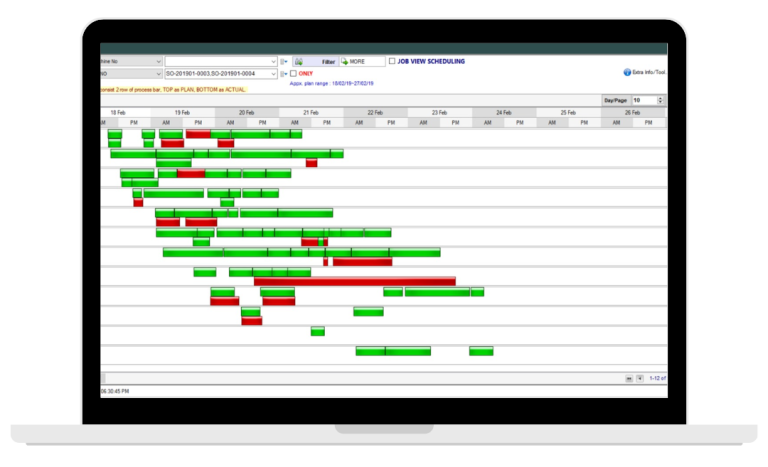
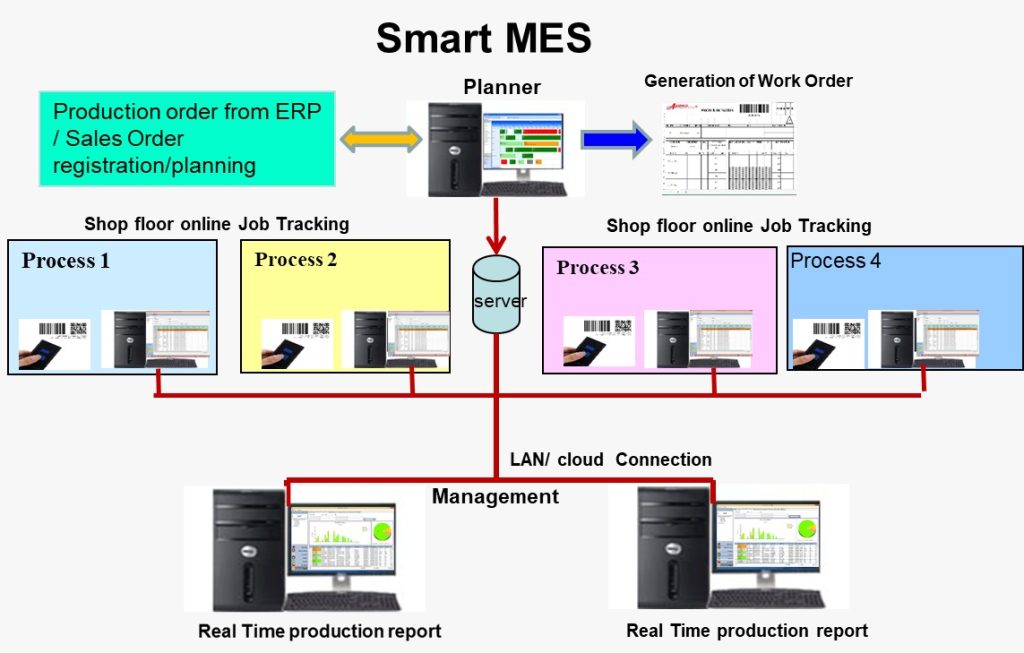
Smart MES optimizes manufacturing execution with real-time visibility and control over production processes. It integrates data from various sources, enhances inventory management, and ensures consistent product quality. This manufacturing execution system reduces waste, improves process efficiency, and boosts operational flexibility, driving greater productivity and cost savings.

Wallpaper Download Desktop Mockup Post 1
WhatsApp Image 2025 12 24 at 6.36.04 PM
Traditional vs. Smart MES: Real-Time Visibility and Optimized Workflows
  1. Production Visibility: Lack of real-time insights vs. Full visibility into real-time production processes.
  2. Workflow Efficiency: Inefficient production workflows vs. Optimized workflows reducing waste.
  3. Quality Control: Inconsistent product quality vs. Consistent quality with real-time monitoring.
  4. Inventory Tracking: Manual inventory management vs. Real-time inventory tracking and control.
  5. Data Integration: Disparate data sources vs. Integrated data providing actionable insights.

Key Functions & Features of SMART MES - Manufacturing Execution System

Key Features of Smart MES: Real-Time Monitoring, Workflow Optimization & Quality Assurance

Key Benefits of SMART MES

Key benefits of SMART MES, including real-time production insights, optimized workflows, and improved inventory management.

Frequently Asked Questions (FAQ)

1. What is a Manufacturing Execution System (MES)?

A Manufacturing Execution System (MES) is production management software that connects planning to the shop floor. Specifically, it controls, tracks, and documents manufacturing activities in real time. As a result, MES improves production visibility, traceability, and quality by capturing work order, material, process, and operator data as products progress through each operation.

2. What problems does MES solve in manufacturing operations?

MES helps manufacturers reduce manual reporting and eliminate disconnected spreadsheets. As a result, it significantly improves real-time production monitoring. By digitising shop floor processes, MES not only improves schedule adherence but also reduces downtime and production delays. Furthermore, it strengthens quality control and enables faster, data-driven decision-making across production, engineering, and operations teams.

3. How does MES improve real-time production tracking and traceability?

MES records key production events, including job start and finish times, process parameters, material consumption, and inspection results. As a result, it builds a complete digital genealogy for each batch or serial number. Consequently, manufacturers gain end-to-end traceability, faster root cause analysis, and stronger audit readiness—particularly in regulated or high-precision manufacturing environments.

4. Can MES integrate with ERP, IoT, PLC, and quality systems?

Yes. MES is commonly integrated with ERP for work order and inventory management. In addition, it connects with PLC/SCADA and Industrial IoT systems for automated machine data collection, as well as with QC/SPC and QMS platforms for quality records. As a result, this integration creates a connected Industry 4.0 manufacturing environment where production and quality data flow seamlessly across systems.

5. Which industries benefit most from MES software?

MES is widely used in industries such as automotive, electronics, precision machining, aerospace suppliers, packaging, and other high-mix or high-volume manufacturing environments. In general, any factory that requires real-time production control, end-to-end traceability, and consistent quality performance can benefit from MES implementation.

6. How is MES implemented and how long does it take to go live?

MES implementation typically begins with a workflow assessment, and is then followed by system configuration, integration, and master data setup (including products, routes, work centers, and users). Often, manufacturers run a pilot line first, before scaling to additional lines and plants after training. This approach reduces risk while simultaneously demonstrating ROI through improved productivity, quality, and traceability.

Related Solutions:

Contact Us Today to Start Your Digital Transformation Journey!

How did you hear about us?